
Sour beer is celebrated for its unique taste profile, but one of the most critical factors influencing its flavor and mouthfeel is рівень карбонізації. Proper control of carbonation ensures consistency in effervescence, taste, and overall consumer experience. Conducting a systematic carbonation level test in accordance with ASTM F1115 is essential for brewers and quality control personnel to maintain desired beer carbonation levels throughout production and shelf life.
Understanding Carbonation Level and Its Importance in Sour Beer
Beer carbonation levels define the amount of dissolved carbon dioxide (CO₂) in the beverage. In sour beer, too little carbonation can result in a flat taste, while excessive carbonation may cause foaming issues and container integrity problems. Accurate measurement of carbonation allows brewers to:
- Maintain flavor consistency across batches.
- Ensure proper mouthfeel and effervescence.
- Monitor CO₂ retention during packaging and distribution.
- Optimize bottle or keg designs to reduce carbonation loss.
By performing a carbonation level test, breweries can balance taste, texture, and shelf stability, critical for consumer satisfaction.
Carbonation Level Test: ASTM F1115 Procedures
У "The ASTM F1115 standard outlines reliable methods to measure carbonation in bottled or kegged beverages. Two main procedures are recommended: Procedure A and Procedure B.
Procedure A: Laboratory Accuracy for Development
Procedure A is primarily used in laboratory settings for the development of packaging and shelf-life studies. Key steps include:
- Підготовка зразків: Bottles are filled with sour beer and sealed according to production standards.
- Controlled Monitoring: High-precision equipment, such as micro-pressure transducers and thermocouples, measures CO₂ pressure and temperature inside the sealed bottle.
- Data Collection: Periodic measurements of initial and final carbonation levels enable calculation of carbonation loss and transfer rates.
- Analysis: The data helps in optimizing packaging design and predicting carbonation stability during storage.
Procedure A provides the highest accuracy, suitable for new product development and experimental brewing techniques.
Procedure B: Quality Control for Production
Procedure B is widely used in operational settings due to its simplicity and efficiency. The workflow includes:
- Sample Selection: Bottled or canned sour beer is chosen for testing.
- Measurement: Simple manual pressure assemblies or automated CO₂ analyzers determine carbonation levels.
- Verification: Data confirms whether carbonation is within acceptable ranges, ensuring product consistency.
- Adjustment: If necessary, filling pressures or CO₂ dosing can be fine-tuned to achieve target carbonation levels.
Procedure B ensures rapid and reliable quality control across production lines, maintaining consistent beer carbonation levels.
Significance of Carbonation Testing in Sour Beer Production
Testing carbonation levels in sour beer is critical because CO₂ impacts both flavor and packaging performance:
- Taste consistency: Accurate carbonation prevents off-flavors due to CO₂ loss or over-carbonation.
- Container safety: Correct CO₂ levels reduce the risk of bursting bottles or leaking cans.
- Shelf stability: Regular monitoring helps predict shelf life and maintain product quality during distribution.
Carbonation level testing also supports compliance with industry standards and consumer expectations.
Recommended Equipment: Cell Instruments Carbon Dioxide Volume Tester
For precise carbonation measurement, the Cell Instruments Carbon Dioxide Volume Tester offers:
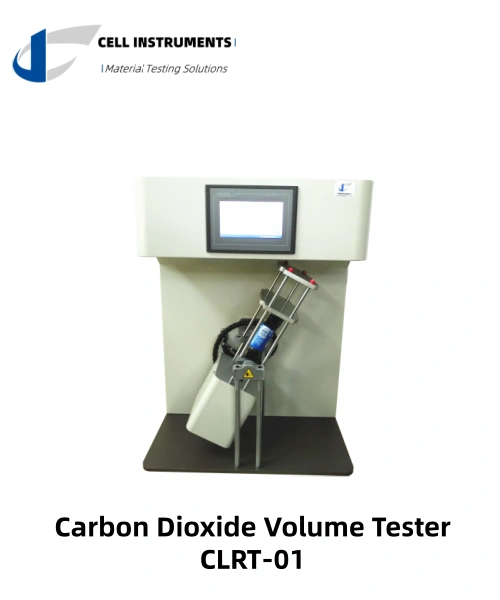
- High accuracy: Measures CO₂ levels in sealed bottles or kegs with precision.
- Ease of use: Supports both manual and automated testing for production or laboratory environments.
- Data reliability: Records and analyzes carbonation levels to guide quality control decisions.
This tester is ideal for breweries seeking to maintain consistent beer carbonation levels and meet stringent quality requirements for sour beer.
Висновок
Performing a carbonation level test on sour beer using ASTM F1115 procedures ensures consistent flavor, proper effervescence, and packaging integrity. Whether applying Процедура A for laboratory development or Процедура B for production quality control, understanding and monitoring beer carbonation levels is key to delivering a premium beverage. Utilizing advanced equipment like the Cell Instruments Carbon Dioxide Volume Tester enables precise measurement, supporting breweries in maintaining high-quality standards and consumer satisfaction.
 UK
UK  EN
EN  AR
AR  BG
BG  CS
CS  DA
DA  DE
DE  EL
EL  ES
ES  ET
ET  FI
FI  FR
FR  HU
HU  ID
ID  IT
IT  JA
JA  KO
KO  LT
LT  LV
LV  NB
NB  NL
NL  PL
PL  PT
PT  RO
RO  RU
RU  SK
SK  SL
SL  SV
SV  TR
TR